
On May 28, the 2026 Digital Intelligence Future Summit (5th Edition), hosted by DIGIWIN, was held in Shanghai. Under the theme "AI Spatial Awakening: Unlocking New Quality Productive Forces," the summit focused on the practical application of artificial intelligence in manufacturing and industrial environments, bringing together industry participants to exchange insights and showcase innovations in intelligent manufacturing, industrial AI, and digital transformation.
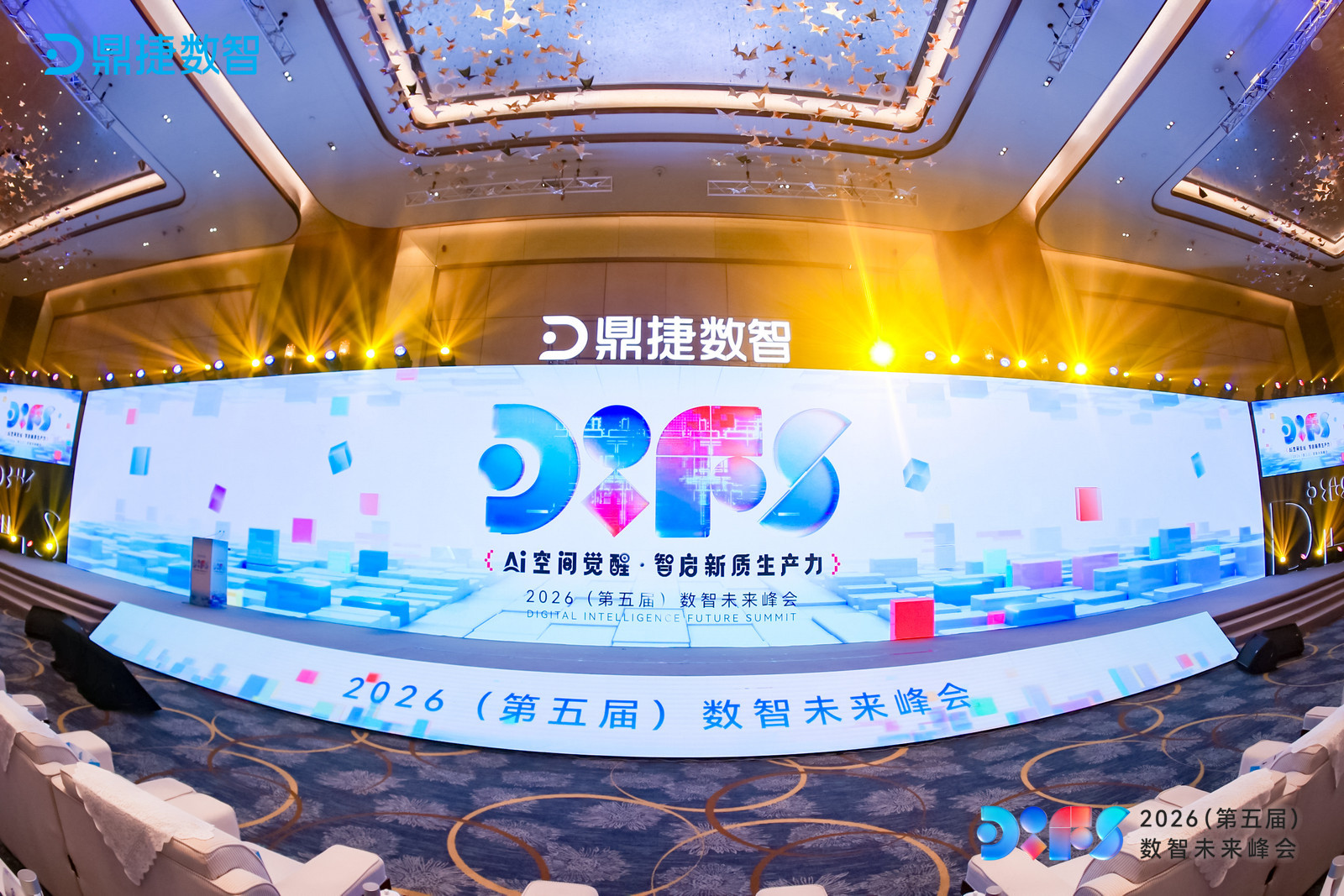
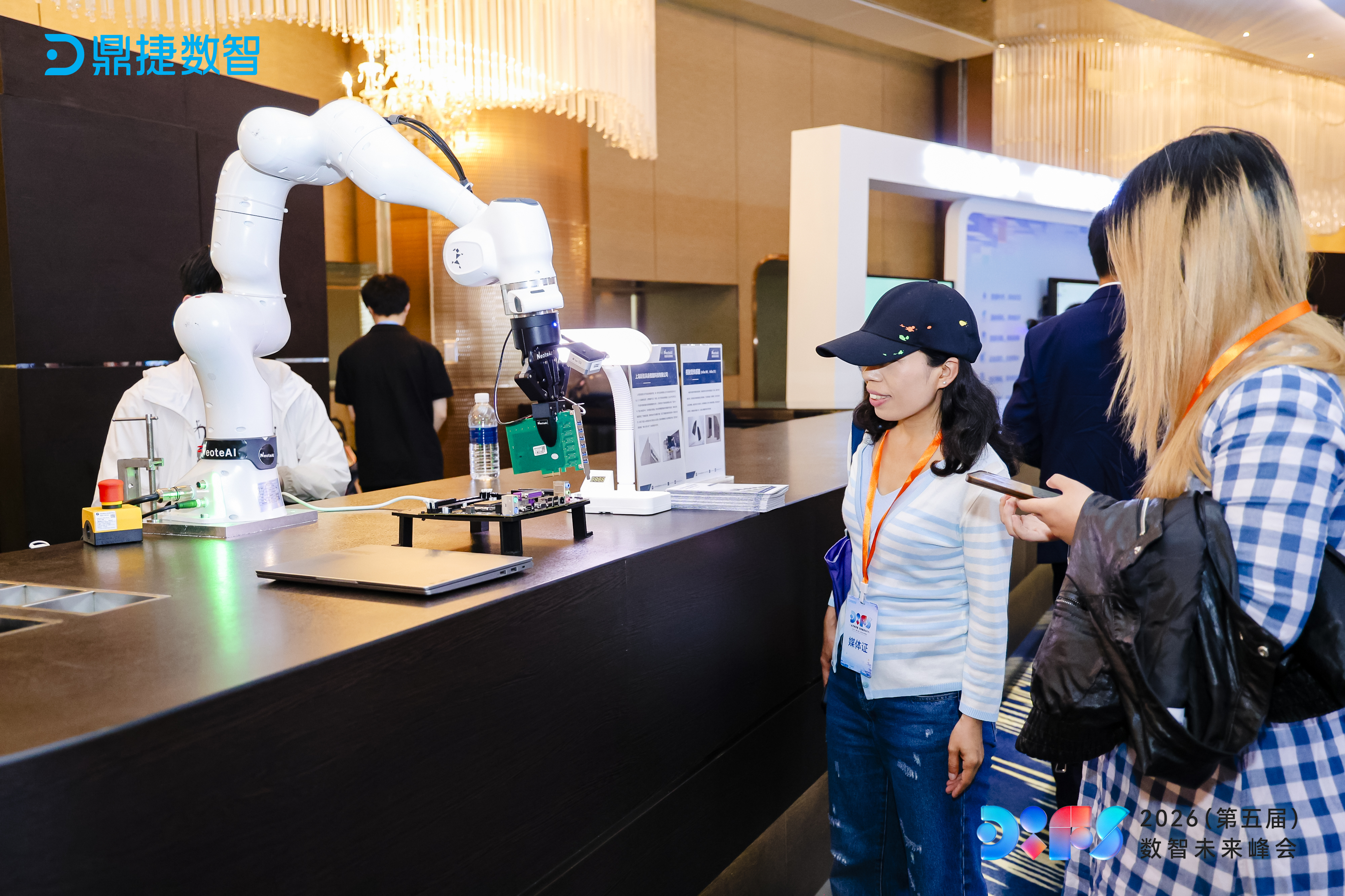
As a company specializing in tactile embodied AI, NeoteAI Tech Co., Ltd. (NeoteAI) was invited to participate in the summit, where it presented a live demonstration of robotic dexterous manipulation powered by high-precision visual-tactile sensors.
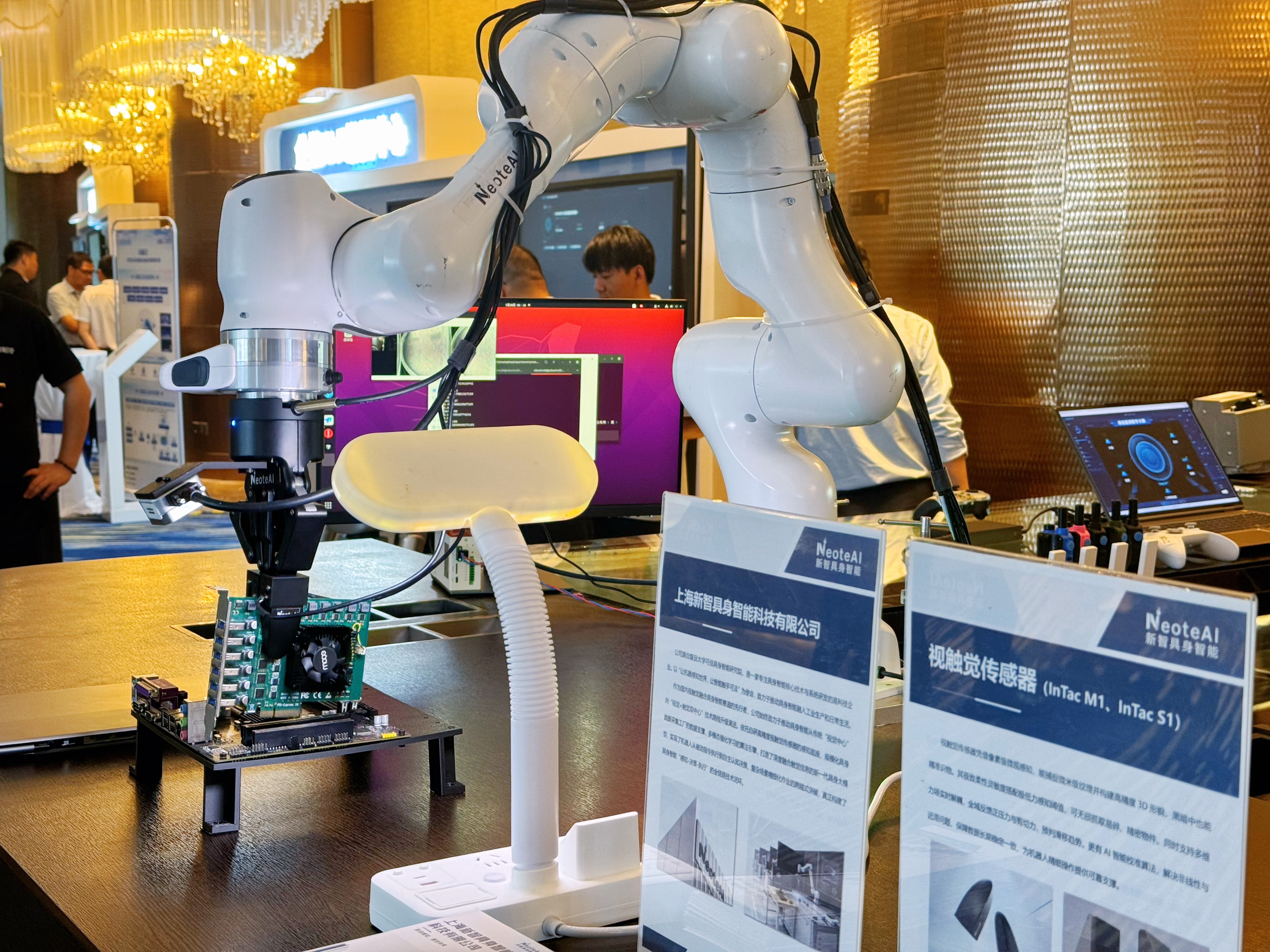
The demonstration highlighted the complete process of inserting and removing a network interface card using a robotic arm. Equipped with NeoteAI's proprietary InTac series of high-precision visual-tactile sensors, the robot could perceive contact forces, slippage, deformation, and changes in contact boundaries in real time, dynamically adjusting insertion force, angle, and motion trajectory to perform high-precision insertion and removal operations.
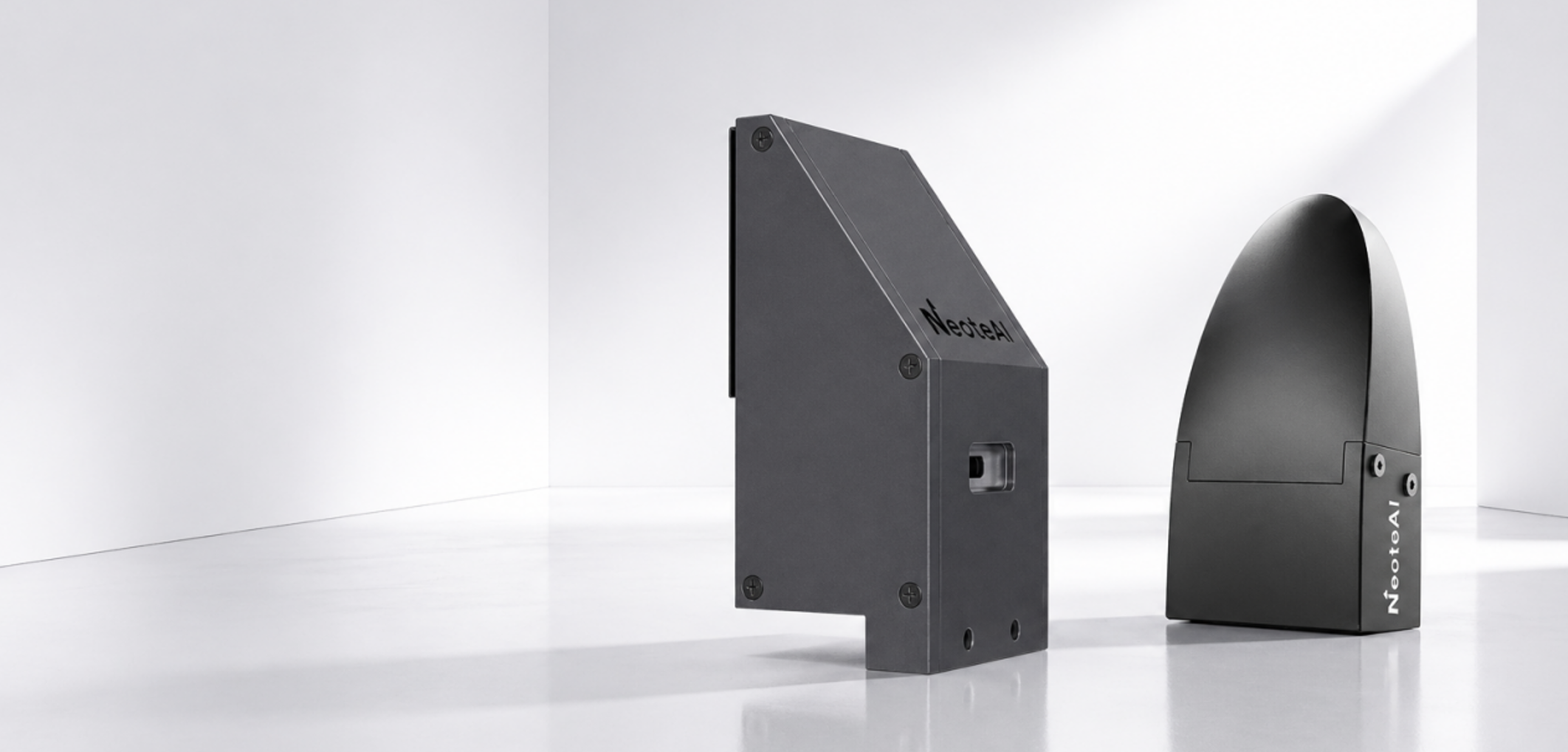
NeoteAI Visual-Tactile Sensors
Compared with conventional robotic systems that rely solely on visual localization and predefined motion trajectories, visual-tactile technology enables robots to continuously receive real-time feedback even after physical contact has been established.
In real-world industrial environments, the greatest challenges in dexterous manipulation often lie not in "seeing" an object, but in physically interacting with it.
Tasks such as connector insertion and removal, cable harness assembly, and precision component installation require robots to continuously monitor changes in resistance, insertion states, and contact stability throughout the manipulation process. The network interface card insertion and removal demonstration at the summit represented a typical high-precision dexterous manipulation scenario.
During the live demonstration, the robotic arm not only completed the insertion task but also dynamically detected abnormal contact forces and subtle positional deviations. By adjusting its motion strategy in real time based on model feedback, the system improved insertion success rates and operational stability.
Behind these capabilities is NeoteAI's integrated "Sensor–Data–Model" technology framework.
Within this framework, visual-tactile sensors capture high-density tactile information during physical interactions between robots and their environments. The data platform then organizes these contact observations into training-ready datasets, which are subsequently incorporated into Vision-Tactile-Language-Action (VTLA) models, tactile world models, and reinforcement learning frameworks.
Through this integrated approach, NeoteAI continuously enhances the generalization and stability of robotic dexterous manipulation across different tasks and operating conditions.
The embodied AI industry is now transitioning from demonstrations of robotic hardware toward real-world application deployment. Compared with general-purpose tasks in open environments, industrial applications impose significantly higher requirements on robotic manipulation precision, stability, and repeatability.
For tasks such as connector insertion and removal, flexible assembly, and cable harness organization, the greatest challenge often comes from understanding and responding to physical feedback during contact.
Tactile perception is becoming an essential capability that enables robots to operate more effectively in the physical world.
Looking ahead, NeoteAI will continue to advance the real-world deployment of visual-tactile technologies in dexterous manipulation applications, including industrial assembly, flexible object manipulation, and non-rigid material handling.
The company will also accelerate the joint training and integration of tactile data with embodied AI models, helping robots evolve from simply "seeing accurately" to "feeling and manipulating precisely."
END