
On May 27, NeoteAI Tech Co., Ltd. (NeoteAI) announced the completion of an angel funding round totaling nearly RMB 100 million. Marking the company's first financing round since its establishment, the investment was jointly led by Shanghai Science & Technology Venture Capital (Group) Co., Ltd. (Shanghai STVC Group), a subsidiary of Shanghai State-owned Capital Investment Co., Ltd., and Fudan Science and Technology Innovation Investment (Fudan Sci-Tech Innovation). Other participants included Ceyuan Fund, an investment fund under Shanghai STVC Group, while INVESTARGET Capital served as the exclusive financial advisor.

NeoteAI is a high-tech company specializing in the research and development of core embodied AI technologies and systems, supported by strong industry-academia-research integration and favorable local government policies.
As a key outcome of the strategic collaboration between Fudan University and Shanghai's Jing'an District, NeoteAI received significant support during its early development from the Jing'an District Commission of Science, Technology and Economy and Shibei Hi-Tech Group.
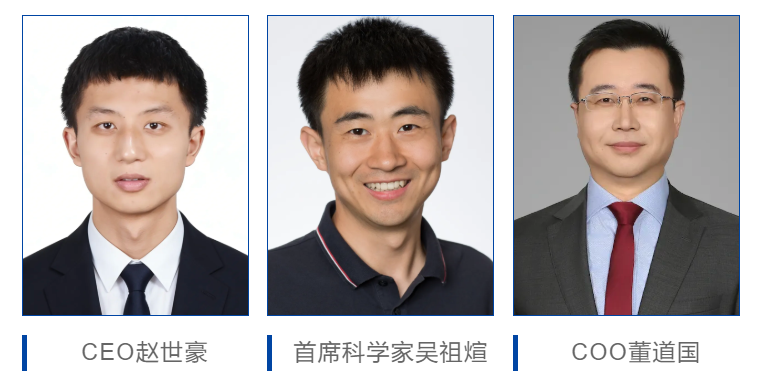
Core Team
NeoteAI's core team originates from the Institute of Trustworthy Embodied Artificial Intelligence at Fudan University, bringing together extensive academic expertise and practical industry experience.
CEO Shihao Zhao earned both his bachelor's and master's degrees from Fudan University and pursued doctoral studies at the University of Hong Kong. He previously served as a core researcher at Microsoft Research and Alibaba's Tongyi Lab, where he focused on advanced model development, with research spanning video world models and generative models.
Chief Scientist Zuxuan Wu serves as Deputy Director of the Institute of Trustworthy Embodied Artificial Intelligence at Fudan University. Previously affiliated with Meta, he has extensive research experience in video models, multimodal models, and other foundational AI technologies.
COO Daoguo Dong brings nearly 20 years of industry experience, combining academic expertise with extensive practical experience in technology commercialization. He previously served as Chief Architect of Huawei Honor's first-generation Magic smartphone and currently holds a research position at the Institute of Trustworthy Embodied Artificial Intelligence at Fudan University. He plays a key role in driving the commercialization of NeoteAI's technologies.
Embodied AI is entering a critical phase of transition from technological validation to industrial deployment.
As robots increasingly take on dexterous manipulation and complex contact-rich tasks, vision alone is no longer sufficient to meet the demands of real-world physical interaction.
Vision enables robots to "see" the world, while touch allows them to perceive contact, understand material properties, assess applied forces, and perform stable manipulation.
Integrating tactile sensing represents a critical step in advancing embodied AI from simply "understanding tasks" to successfully "executing tasks."

Over the past two years, the embodied AI industry has largely focused on visual perception. Robots have rapidly improved their ability to perceive the world and understand instructions, but the limitations of vision have become increasingly apparent as they enter real-world manipulation environments.
In many dexterous manipulation scenarios, robots must do more than identify object positions. They need to continuously perceive contact forces, slippage, friction, deformation, and material states.
Precision tasks such as USB connector insertion and removal, screw fastening, and the grasping of semiconductor chips and optical lenses require reliable contact assessment.
Non-rigid objects such as cable harnesses, paper cups, silicone components, plastic tubes, and soft rubber pads maintain certain structural forms but deform during manipulation. Flexible materials such as fabrics, Xuan paper, adhesive tape, and cotton fibers are even more susceptible to bending, wrinkling, and instability.
These tasks are difficult to perform reliably using visual information alone.
The team firmly believes that embodied AI cannot enter the real physical world by relying solely on visual perception and video data.
Whenever a robot makes contact and interacts with its environment, tactile perception becomes an essential capability.
The industry is shifting from a "Visual-Centric" paradigm toward a dual-centered "Vision + Touch" approach (Visual + Tactile-Centric).
Guided by this vision, NeoteAI has developed an integrated technology framework built around three fundamental layers: Sensors, Data, and Models.
Sensor Layer: Visual-Tactile Sensors
NeoteAI has independently developed visual-tactile sensors capable of capturing multidimensional physical interaction information, including contact forces, slippage, deformation, and contact boundaries.
The value of these sensors goes beyond adding another hardware peripheral to robotic systems. More importantly, they enable reliable acquisition of contact information during real-world manipulation, providing a foundation for subsequent data processing and model training.
The development of the visual-tactile sensors was primarily led by Wenming Chen, a researcher at the Institute of Trustworthy Embodied Artificial Intelligence at Fudan University, and his doctoral student Hu Luo.
This represents one of the first significant outcomes of NeoteAI's industry-academia-research collaboration with Fudan University.
The sensors have already entered the evaluation and development pipelines of leading embodied AI customers, with ongoing validation in dexterous manipulation, data collection, and model training applications.
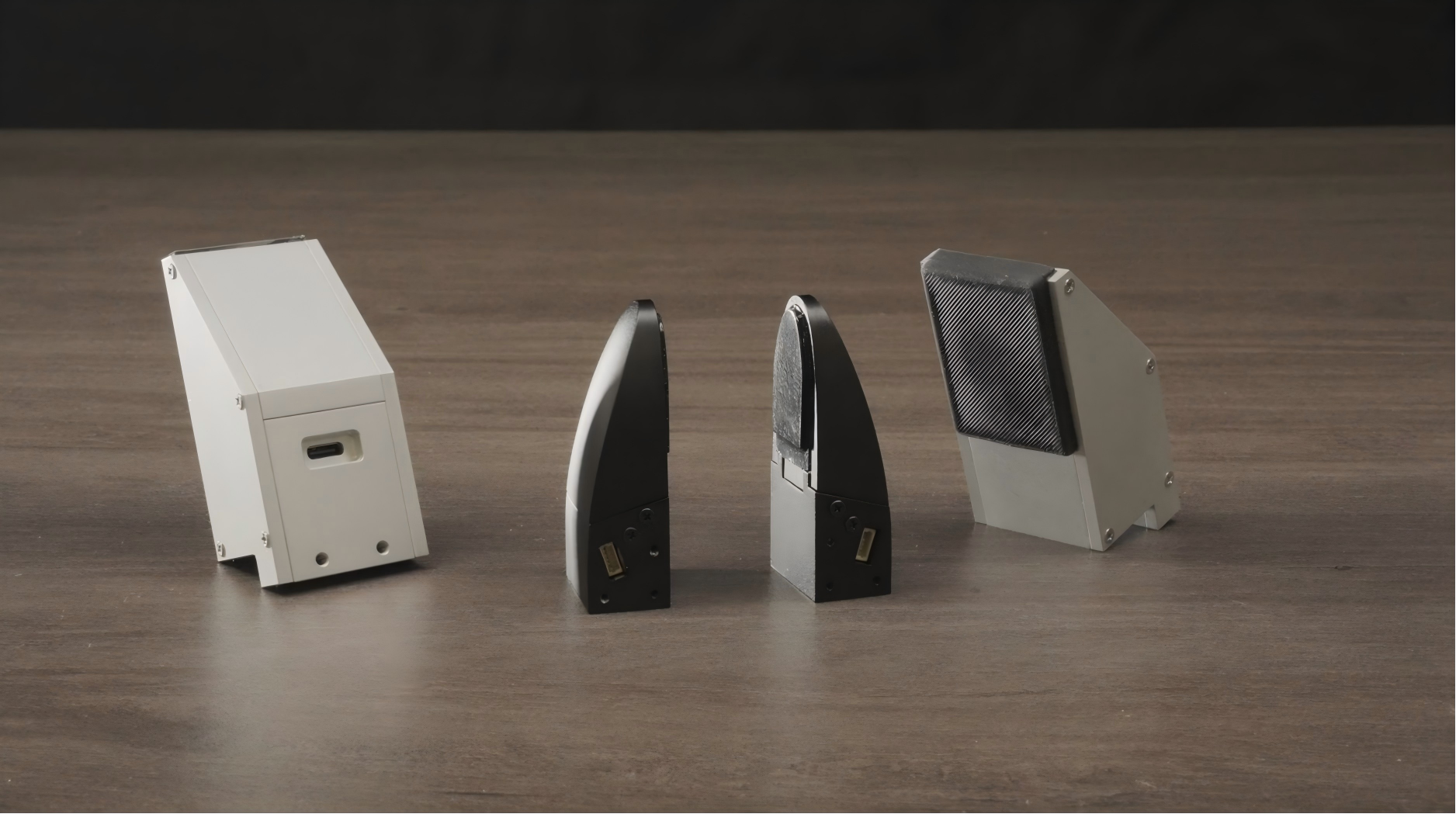
NeoteAI Visual-Tactile Sensors
Data Layer: Specialized Embodied AI Data Service Platform
NeoteAI has established an embodied AI data collection facility covering more than 1,000 square meters, creating a closed-loop data production system designed to address key challenges in robotic dexterous manipulation.
The facility supports a wide range of real-world scenarios, including industrial assembly, deformable object manipulation, and everyday service tasks, establishing a scalable data production infrastructure for training tactile embodied foundation models.
The company has also independently developed a general-purpose tactile data collection solution built around two complementary approaches: real-robot data collection and portable Universal Manipulation Interface (UMI) devices.
On the one hand, real-robot data collection enables the acquisition of high-quality dexterous manipulation data from physical robotic platforms.
On the other hand, UMI-based collection lowers the barriers to deploying data collection systems across different scenarios and acquiring task demonstrations.
Together, these approaches support data collection and transfer across different robotic arm platforms, helping companies reduce the costs associated with dexterous manipulation data acquisition, hardware modification, and model adaptation.
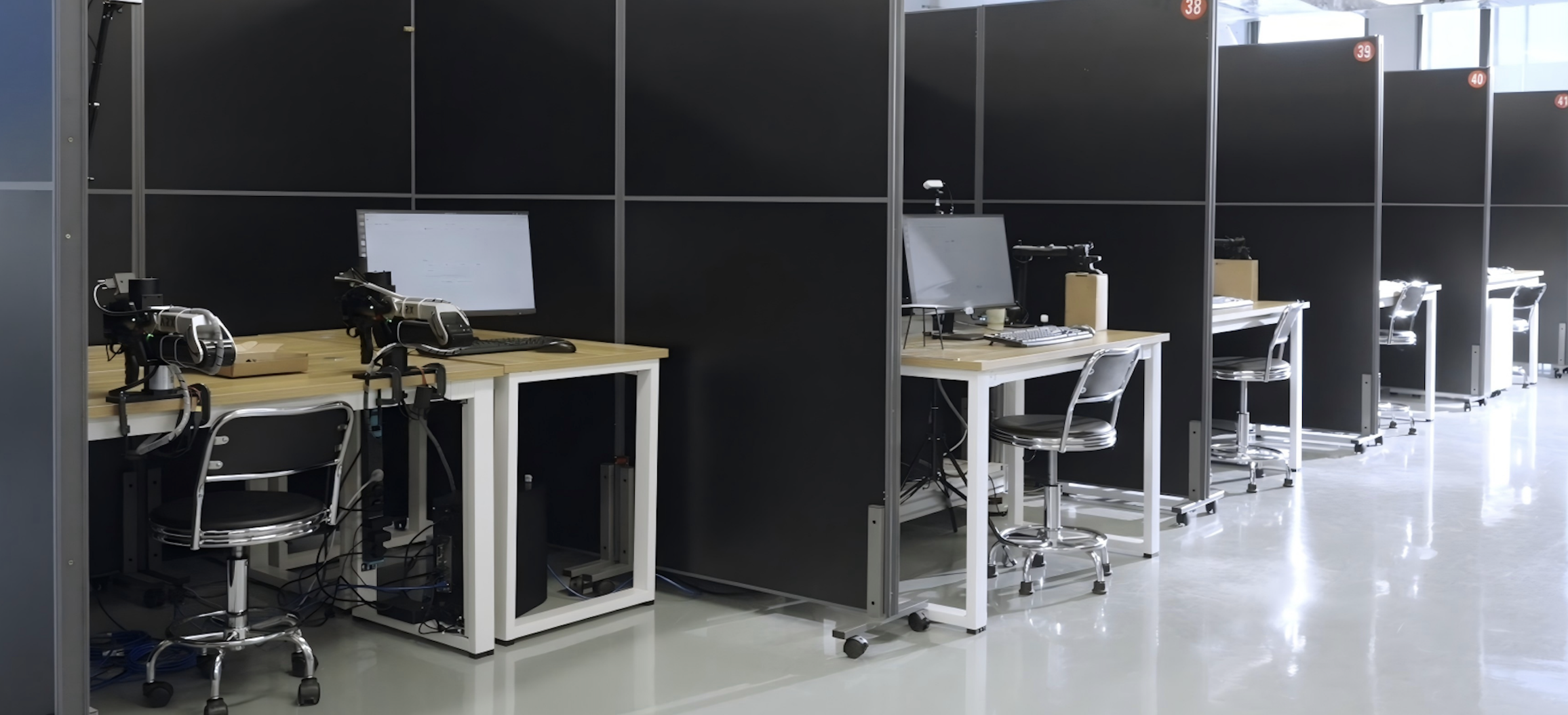
NeoteAI Large-Scale Visual-Tactile Embodied AI Data Collection Platform
Model Layer: Tactile Embodied Foundation Models
At the model layer, the team is developing embodied AI foundation models that incorporate tactile sensing as a core modality.
The goal is to integrate tactile information into pretrained embodied AI foundation models while combining it with tactile-enhanced reinforcement learning approaches, addressing the limitations of robotic physical perception during real-world contact and interaction.
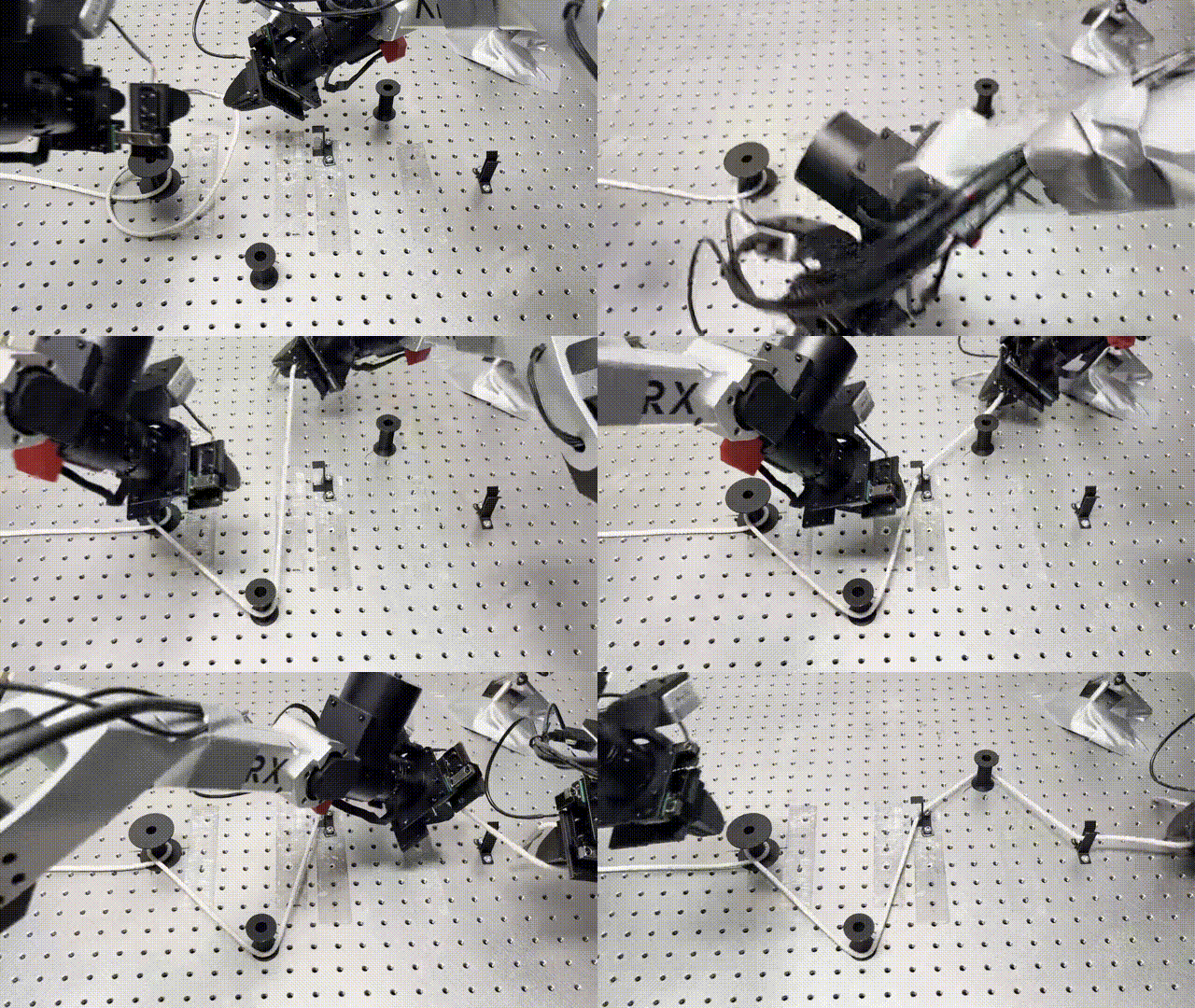
NeoteAI Tactile Embodied Foundation Models for Dexterous Manipulation
The company's model development focuses on three complementary technical directions.
Vision-Tactile-Language-Action (VTLA) Models integrate visual, tactile, language, and action information, enabling robots to develop a more comprehensive understanding of environmental states and task instructions.
Tactile World Models learn physical changes during contact from tactile and visual data, enhancing robots' ability to understand object properties, predict future states, and anticipate the consequences of their actions.
Tactile Reinforcement Learning uses tactile feedback to refine manipulation policies, allowing robots to improve task success rates and operational stability through physical interaction.
NeoteAI Tactile Embodied Foundation Models for Dexterous Manipulation
This integrated approach is also what differentiates NeoteAI from other embodied AI companies.
By centering its technology development around tactile data, the company aims to build a complete system spanning tactile perception, data acquisition, and model training, enabling robots to understand contact, forces, and material states in addition to visual information.
"The challenge of dexterous manipulation is not simply enabling robots to 'see,' but allowing them to make informed decisions at the moment physical contact occurs," the company stated.
"By developing sensors, data platforms, and models in parallel, NeoteAI aims to transform continuous, real-world tactile data into learnable and generalizable robotic capabilities, ultimately enhancing autonomous perception, motion planning, and task execution."
Following the completion of this funding round, NeoteAI will continue to expand its tactile data collection capabilities and accelerate the training and validation of tactile embodied foundation models in real-world manipulation tasks.
From visual-tactile sensors and specialized embodied AI data platforms to foundation models incorporating tactile sensing, NeoteAI is building an integrated tactile embodied AI technology framework designed for the real physical world.
Through the coordinated advancement of perception hardware, real-world interaction data, and embodied AI models, the company aims to enable robots not only to see the world, but also to understand it through physical contact and execute complex manipulation tasks with precision.
END