
The EmTech China 2025 Global Emerging Technology Summit, hosted by MIT Technology Review, successfully concluded at the Jing'an International Science and Technology Innovation Community in Shanghai.
Under the theme "China's Future," the summit brought together dozens of distinguished guests, including Nobel Prize laureates, members of national academies of sciences, and leaders of globally renowned technology companies. Participants engaged in in-depth discussions on key topics such as the commercialization of frontier technologies and international collaboration in technological innovation.
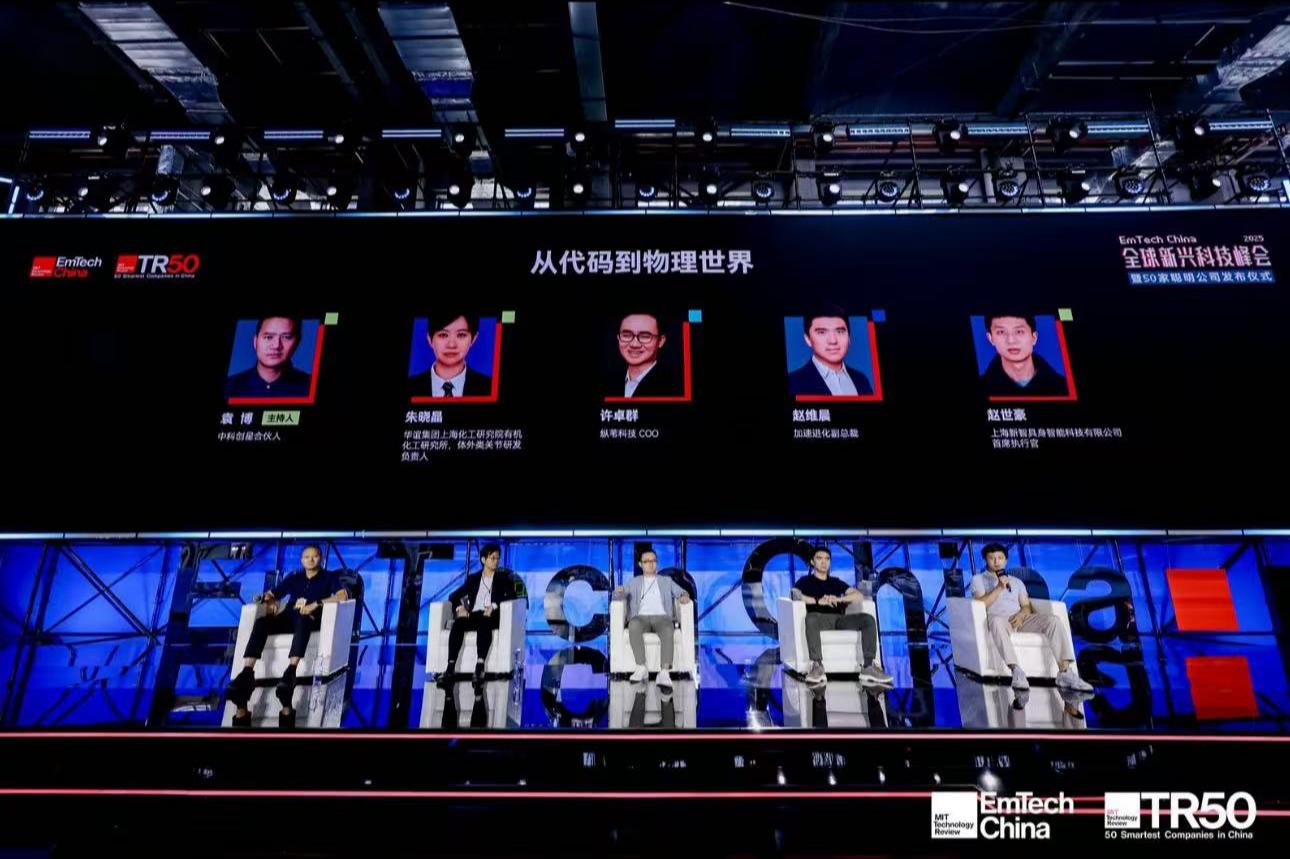
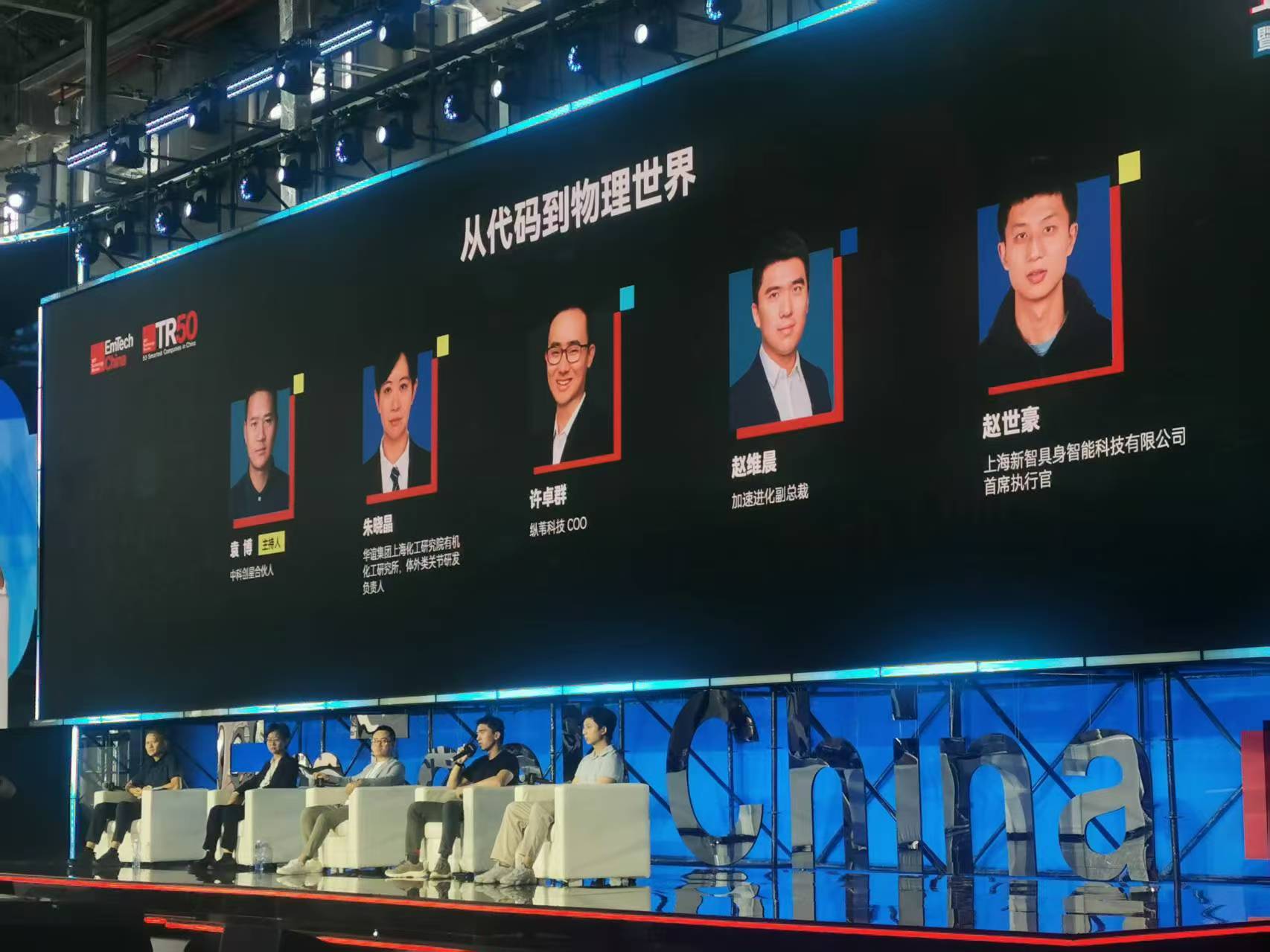
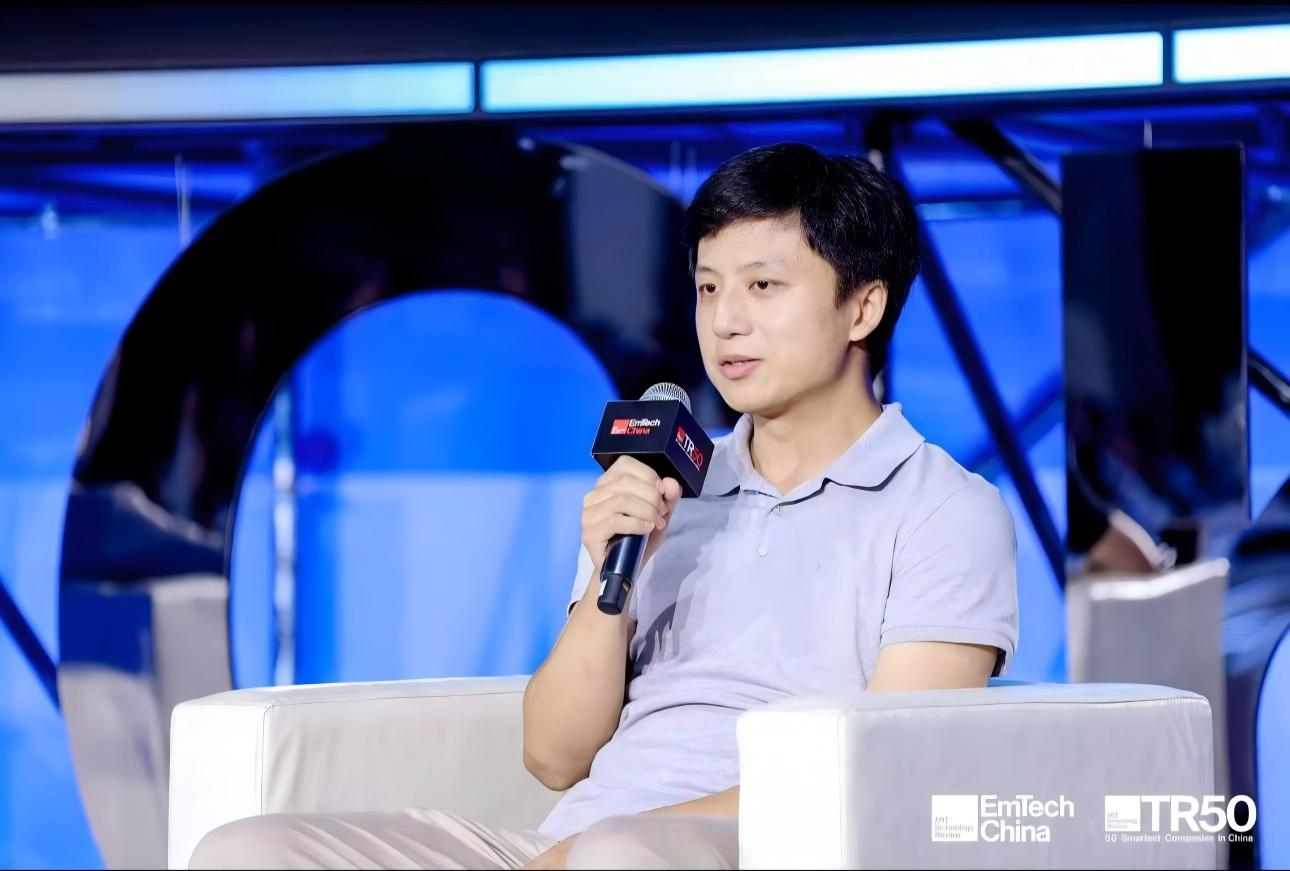
Shihao Zhao, CEO of NeoteAI Tech Co., Ltd. (NeoteAI), was invited to participate in the summit. During a panel discussion titled "From Code to the Physical World," Zhao joined representatives from academia and industry to explore the key challenges and potential breakthroughs in scaling embodied AI applications.
As one of the world's influential emerging technology conference series, EmTech has been held in major innovation hubs around the globe. Since its introduction to China in 2018, EmTech China has focused on the transformation of cutting-edge technologies from laboratory research into industrial applications, serving as a platform connecting global innovation communities.
This year's "From Code to the Physical World" discussion focused on the practical challenges and future prospects of robotics. Participants explored how embodied AI could move beyond digital environments and into the physical world, enabling scalable deployment in sectors such as industrial manufacturing and logistics.
The discussion became one of the summit's key sessions, attracting considerable attention from attendees.
During the panel discussion, Zhao shared insights based on NeoteAI's technological development and experience in industrial applications, addressing several fundamental challenges facing the embodied AI industry.
He noted that embodied AI is currently at a critical turning point, transitioning from technology demonstrations toward large-scale real-world deployment.
According to Zhao, one of the industry's most significant bottlenecks is the lack of human-like, fine-grained tactile perception capabilities in robotic systems.
Conventional robots rely heavily on vision-based solutions, often lacking the tactile awareness and force feedback required for physical interaction.
These limitations make it difficult for robots to handle fragile and deformable objects or perform precision manipulation in unstructured environments.
Zhao emphasized that this represents a major barrier preventing embodied AI from evolving beyond passive task execution toward active environmental understanding and autonomous decision-making.
During the discussion, Zhao also introduced NeoteAI's technological approach, which places visual-tactile perception at the center of its development strategy.
The company focuses on building a proprietary hardware ecosystem of high-precision visual-tactile sensors to address the limitations of conventional vision-only robotic systems.
NeoteAI's proprietary visual-tactile sensors offer a spatial resolution of up to 40,000 sensing points per square centimeter and a sensitivity level claimed to be 10 times that of human fingertips.
These capabilities provide robots with highly detailed tactile information, enabling more precise perception of contact conditions and physical interactions.
By addressing the limitations of vision-only approaches in dexterous manipulation, compliant interaction, and safe operation, NeoteAI's sensing technologies establish a critical hardware foundation for precise robotic control and intelligent interaction in complex environments.
Zhao also shared NeoteAI's progress in technology commercialization.
He emphasized that the ultimate value of a deep-tech company lies in its ability to translate technological innovation into practical solutions and successfully deploy those solutions in real-world applications.
As the first major project established following the deepening of strategic collaboration between Jing'an District and Fudan University, NeoteAI has benefited from a combination of regional policy support, Fudan University's research resources, and capital market backing since establishing its presence in Jing'an, Shanghai.
With these advantages, the company is accelerating both technological development and commercial deployment.
Zhao's insights received positive feedback from academic and industry representatives attending the summit.
Participation in EmTech China 2025 provided NeoteAI with an important opportunity to showcase China's innovations in embodied AI to a global audience, while also laying the groundwork for further international industrial collaboration and the large-scale adoption of its technologies.
Looking ahead, NeoteAI will continue to advance its core technologies in tactile embodied AI, strengthen collaboration across the industrial value chain, and accelerate the large-scale deployment of embodied AI in a broader range of industrial scenarios.
Through continued technological innovation and real-world industrial applications, the company aims to contribute Chinese technological expertise and practical experience to the development of the global embodied AI industry.
END